Fashion Design has emerged as one of the most sought-after creative career options in India. With the growing influence of fashion, lifestyle brands, e-commerce, and digital media, professional training in fashion design has become essential for students who wish to enter this competitive industry. Kolkata, known for its rich cultural heritage and artistic traditions, is steadily becoming an important centre for fashion design education.
This article explains the syllabus, course duration, and career scope of a Fashion Design course in Kolkata, helping students make an informed decision.
What Is a Fashion Design Course?
A Fashion Design course is a professional programme that trains students in the art and science of designing clothing and fashion products. It combines creativity with technical knowledge, covering areas such as garment construction, textile studies, fashion illustration, pattern making, and trend analysis.
The course is designed to prepare students for real-world fashion industry requirements by balancing theory, practical training, and industry exposure.
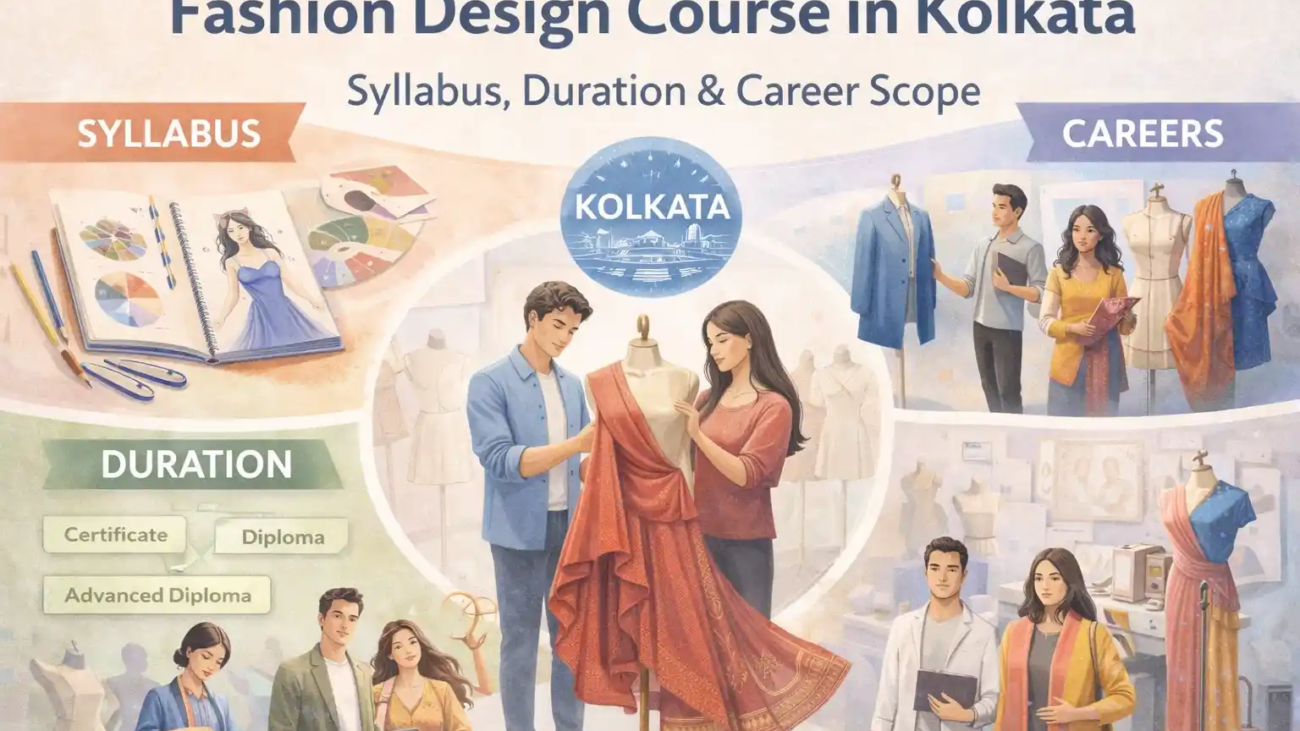
Fashion Design Course Syllabus
The syllabus of a Fashion Design course in Kolkata is structured to develop both creative and technical skills. While the exact subjects may vary depending on the institute, a standard syllabus generally includes the following modules:
1. Basics of Fashion Design
- Introduction to fashion and design principles
- Elements of design: colour, texture, shape, and form
- History of fashion (Indian and global)
2. Fashion Illustration & Sketching
- Freehand drawing techniques
- Figure proportions and poses
- Technical sketches and flats
- Digital illustration basics
3. Textile Studies
- Natural and synthetic fibres
- Fabric construction methods
- Weaves, knits, and non-woven textiles
- Dyeing, printing, and surface ornamentation
- Indian textiles and traditional fabrics
4. Pattern Making
- Basic pattern drafting
- Size charts and measurements
- Pattern manipulation techniques
- Industrial pattern concepts
5. Garment Construction
- Sewing techniques
- Garment components
- Finishing methods
- Draping techniques on mannequins
6. Fashion Forecasting & Trend Analysis
- Understanding fashion cycles
- Market research
- Trend prediction methods
- Consumer behaviour analysis
7. Computer-Aided Design (CAD)
- Digital fashion design tools
- Pattern development software
- Portfolio presentation using digital platforms
8. Fashion Merchandising & Marketing
- Basics of fashion business
- Brand development
- Retail and visual merchandising
- Fashion communication
9. Portfolio Development
- Collection planning
- Theme-based design projects
- Professional portfolio presentation
10. Internship / Live Projects
- Industry exposure
- Practical experience with fashion houses, boutiques, or export units
Duration of a Fashion Design Course in Kolkata
The duration of a Fashion Design course depends on the level of study:
- Certificate Courses: 6 months – 1 year
- Diploma Courses: 1 – 2 years
- Advanced Diploma Courses: 2 – 3 years
Most students prefer diploma or advanced diploma programmes, as they offer deeper learning, hands-on training, and better career opportunities.
Institutes like IFA Kolkata structure their courses to ensure continuous practical exposure along with classroom learning, helping students build industry-ready skills within the course duration.
Eligibility for Fashion Design Course
Eligibility criteria are generally student-friendly:
- Minimum qualification: 10+2 (any stream)
- Creativity and interest in fashion and design
- No prior design experience required for beginners
Some institutes may conduct aptitude tests or personal interviews to assess creativity and interest.
Career Scope After a Fashion Design Course
The fashion industry offers a wide range of career opportunities for trained professionals. After completing a Fashion Design course in Kolkata, students can explore the following roles:
1. Fashion Designer
Designers create original clothing collections for brands, boutiques, or their own labels.
2. Apparel Production Executive
Responsible for managing garment production processes, quality control, and timelines.
3. Textile Designer
Works with fabrics, prints, and surface designs for apparel and home furnishings.
4. Fashion Illustrator
Creates visual representations of fashion concepts for designers, brands, and publications.
5. Fashion Stylist
Works in media, fashion shoots, films, advertising, and events.
6. Fashion Merchandiser
Connects design with business by managing product planning, retail strategies, and inventory.
7. Boutique Owner / Entrepreneur
Many graduates start their own fashion brands, boutiques, or online stores.
8. Costume Designer
Designs costumes for films, television, theatre, and OTT platforms.
With the growth of digital fashion platforms and e-commerce, career opportunities have expanded significantly, allowing designers to reach national and international markets.
Why Study Fashion Design in Kolkata?
Kolkata offers a unique blend of tradition and modern creativity. Students benefit from:
- Rich textile heritage and crafts
- Growing fashion and design industry
- Affordable education compared to metro cities
- Access to skilled faculty and industry exposure
Institutes like IFA Kolkata provide:
- Industry-oriented curriculum
- Hands-on practical training
- Digital design labs
- Portfolio development support
- Internship and placement assistance
Conclusion
A Fashion Design course in Kolkata is an excellent choice for students who wish to build a creative and professional career in the fashion industry. With a comprehensive syllabus, practical learning approach, and strong career scope, the course equips students with the skills required to succeed in a competitive market.
By choosing the right institute and focusing on skill development, creativity, and industry exposure, students can turn their passion for fashion into a successful and long-term career.